Plastic-Free: How I kicked the plastic habit and how you can too by Beth Terry is one of the books I've been reading this week.

Here are 5 things I love about this book:
1. Beth Terry talks in a friendly and non-judgmental voice, explaining how she went from living a lifestyle of consumption and convenience to completely changing the way she lives, one step at a time. It is a very interesting and inspiring story.
2. She is not afraid to laugh at herself, like when she explains her first failed attempts to make liquid soap.
3. The chapter titled Nine reasons our personal changes matter is excellent for anyone who wonders whether a small personal choice would make any difference at all in the big picture.
4. The book has clear action items and the author encourages readers to make, perhaps, one change a month (until it becomes a habit) to keep from being overwhelmed.
5. The book features blurbs on several other people who have used different strategies to avoid plastic.It is nice to see how each person takes a different approach to reducing plastic.
My personal viewpoint on plastic: It is a marvelous innovation that has brought us amazing things, including electronics and the internet which I'm using right now to talk to you. But the ridiculous overuse of plastic and the wasteful throw-away products made with plastic threaten to suffocate us, literally and figuratively. So there's much to be said for using plastic sparingly and wisely.
Beth Terry writes a blog called My Plastic-Free Life. Her Steps to a Plastic-Free Life contains dozens of tips for everyday life. She says that the top two ways to reduce plastic waste is to avoid plastic bags and bottled water.
10 ways I'm reducing plastic waste from my life:
1. Not using plastic shopping bags. I've completely embraced this habit and it has been years since I've taken a plastic bag from the store. I carry my rag tag collection of cloth bags proudly. And if I make an unplanned stop at the grocery store, I carry out groceries in my hands.
2. Not using plastic produce bags. For some time, I was reusing those flimsy plastic produce bags; then I decided it was worth it to invest a bit of cash cash and buy a nice set of reusable bags. I bought a set of mesh bags from this Etsy shop and boy, I'm a happy customer. Years later, they're as good as new and I always get compliments from check-out clerks who want to know where I got those cool produce bags.
3. Not using bottled water. I've used filter pitchers and faucet filters at various times in the past, but now we drink straight out of the tap. Tap water in the US is as clean and often cleaner than bottled water. Although our fridge also has a filter in the door. So there's no need to buy bottled water ever. At work, I had a reusable bottle that I refilled at the water fountain. When I travel, I take an empty water bottle through security and then fill it up once I am in the terminal. V occasionally buys soda but always in cans (the easiest thing to recycle).
4. Switching to a glass lunch box. Our lunches are always dinner leftovers, and they generally need heating up. I still use plastic boxes for food storage but never heat food in plastic. I bought glass lunch boxes a few years ago and they're working great. They're heavy but they don't leak. Of course, if you're carrying a lunch that doesn't need heating, a good old stainless steel dabba would be ideal.
5. Not buying new plastic toys. I pledged to myself that I would not buy plastic toys either for Lila or for other kids. Instead, I've been buying wooden toys or books or games as gifts. We gratefully accept hand-me-downs from friends which is how Lila has the usual plastic baby toys- piano, stacking rings, oversize lego type stuff etc. Lila does get plastic toys as gifts and I allow that; it would be harsh not to. When I want a particular toy that might be plastic, I look for it in garage sales or on Craigslist. The most important thing is that we use the toys with care so that after they're outgrown, they can be cleaned and passed on to another child. Plastic is practically indestructible so we might as well take advantage of that.
6. Choosing glass jars where possible. With many things, for instance, baby food and peanut butter and many other products, you have the choice of buying a glass or plastic container. In my book, glass wins every time because I wash out the jars and reuse them in many ways. Those plastic tubes of baby food especially make me cuh-RAZY. One tablespoon of food inside this thick junky plastic tube.
7. Using as few plastic baggies as possible. Snacks can be easily placed in a small container instead of a throw away baggie. Ditto for stuff that needs to be put in the freezer. We gave reusable sandwich/snack bags as birthday party favors:

8. Making most of our meals at home. Frozen meals and fast food creates an incredible amount of trash. Making things like yogurt at home also saves quite a bit of plastic.
9. Cloth diapers. Anu asked me about our cloth diapering experience. We cloth diapered Lila the whole time we were living in St. Louis (her first year), and we used a cloth diaper service. It worked beautifully for us because we didn't have to wash the cloth diapers. With our work situation, we couldn't have. These diapers were rectangular cloths that you folded and used with a velcro-closed wrap on top. So this is the only kind of cloth diaper I have experience with. Using these was just as easy as using disposables. After leaving STL, I've been using disposable diapers while I try and figure out what to do.
10. BYO doggie bag. When we go out to eat, I usually bring a container from home to use as my "doggie bag" for bringing leftovers home. This weekend, we went out to brunch. I didn't eat the buttermilk biscuits and wanted to bring them home for a snack, but I'd forgotten to take a container. Luckily, I stopped myself just before I asked for a take out box (usually styrofoam or plastic) and wrapped them in a paper napkin to bring home instead. Every little bit helps. When I just take a minute to think, I can make better decisions.
Three things I want to work on:
1. Doggie poop bags: We buy plastic bags for picking up after Mr. Dale. I'm reading up on a good alternative to this.
2. Eating utensils while on the go: Once in a while, we'll be out and about and stop at some fast foodish place- say, a burrito place- for a meal. Then I use plastic forks and spoons and cringe at the waste. Carrying eating utensils in my purse would be such an easy thing and I need to start doing that.
3. Buying from bulk bins: There are a couple of good stores in town with wonderful bulk bins. I can cut down on packaging waste by using those instead of pulling packets off the shelf.
Sometimes, there are tricky choices around the risk-benefit ratio of plastic. One of the first things I did in the new home was to look for a backyard composter- now that I don't have access to the lovely community garden in STL and am responsible for my own composting. After thinking of different options, we ended up buying this plastic composter which is sold at subsidized rates by our county.
I don't love that it is made of plastic, but it is rodent-proof (also keeping out such pests as kids and dogs) and hopefully will last a lifetime and the benefits of composting over years definitely outweigh the cost of this plastic thingamajig.
I also noticed that this particular book has a plastic cover- kinda ironic given the title. But again, this is a copy from the public library. Dozens, perhaps hundreds of people will read this book, and the protective plastic cover is probably a small price to pay for keeping this copy stain free and clean.
When it comes to making these kinds of changes in our lives, there's always the temptation to say, "I don't have time for this". I can't remember to carry bags around, and who's going to wash out snack bags every day? We pride ourselves on being busy, busy, busy. But this is when I ask myself what kind of person I want to be, and the choice is easy. I don't want to be wasteful. I want to be mindful. And most of all, I want to set a good example. These changes are worth working towards and making time for. I have a LONG way to go but at least the intention is there.
Easiest idea for those who eat lunch at work
Keep a mug, glass, plate, napkin and eating utensils in a desk drawer. BOOM- over time, countless plastic/paper plates, plastic forks and spoons, paper napkins will be saved from the landfill.
Snehal shared the link for another blog with great tips: Zero Waste Home.
Your turn: what plastic-reducing strategies are working for you? What are you struggling with?

Here are 5 things I love about this book:
1. Beth Terry talks in a friendly and non-judgmental voice, explaining how she went from living a lifestyle of consumption and convenience to completely changing the way she lives, one step at a time. It is a very interesting and inspiring story.
2. She is not afraid to laugh at herself, like when she explains her first failed attempts to make liquid soap.
3. The chapter titled Nine reasons our personal changes matter is excellent for anyone who wonders whether a small personal choice would make any difference at all in the big picture.
4. The book has clear action items and the author encourages readers to make, perhaps, one change a month (until it becomes a habit) to keep from being overwhelmed.
5. The book features blurbs on several other people who have used different strategies to avoid plastic.It is nice to see how each person takes a different approach to reducing plastic.
My personal viewpoint on plastic: It is a marvelous innovation that has brought us amazing things, including electronics and the internet which I'm using right now to talk to you. But the ridiculous overuse of plastic and the wasteful throw-away products made with plastic threaten to suffocate us, literally and figuratively. So there's much to be said for using plastic sparingly and wisely.
Beth Terry writes a blog called My Plastic-Free Life. Her Steps to a Plastic-Free Life contains dozens of tips for everyday life. She says that the top two ways to reduce plastic waste is to avoid plastic bags and bottled water.
10 ways I'm reducing plastic waste from my life:
1. Not using plastic shopping bags. I've completely embraced this habit and it has been years since I've taken a plastic bag from the store. I carry my rag tag collection of cloth bags proudly. And if I make an unplanned stop at the grocery store, I carry out groceries in my hands.
 |
| My favorite cloth grocery bag; a gift from my friend Chaitanya. She stamped it with apple halves using fabric paint. |
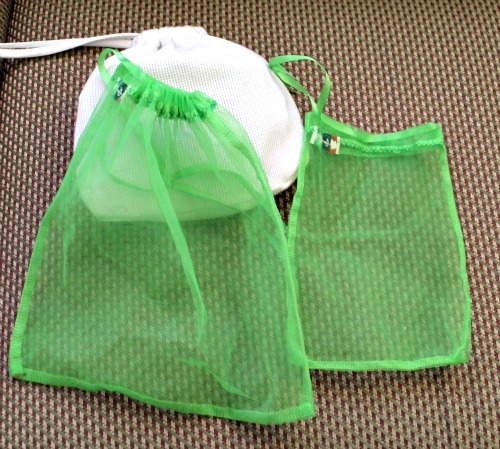 |
| Reusable mesh produce bags |
 |
| Clean, free tap water: a beautiful thing |
 |
| Glass dabba for hot lunches at work or at home |
 |
| Ride-on toy: 101% plastic BUT it has a police siren! Bought it off Craigslist for 10 bucks. |
7. Using as few plastic baggies as possible. Snacks can be easily placed in a small container instead of a throw away baggie. Ditto for stuff that needs to be put in the freezer. We gave reusable sandwich/snack bags as birthday party favors:
8. Making most of our meals at home. Frozen meals and fast food creates an incredible amount of trash. Making things like yogurt at home also saves quite a bit of plastic.
9. Cloth diapers. Anu asked me about our cloth diapering experience. We cloth diapered Lila the whole time we were living in St. Louis (her first year), and we used a cloth diaper service. It worked beautifully for us because we didn't have to wash the cloth diapers. With our work situation, we couldn't have. These diapers were rectangular cloths that you folded and used with a velcro-closed wrap on top. So this is the only kind of cloth diaper I have experience with. Using these was just as easy as using disposables. After leaving STL, I've been using disposable diapers while I try and figure out what to do.
10. BYO doggie bag. When we go out to eat, I usually bring a container from home to use as my "doggie bag" for bringing leftovers home. This weekend, we went out to brunch. I didn't eat the buttermilk biscuits and wanted to bring them home for a snack, but I'd forgotten to take a container. Luckily, I stopped myself just before I asked for a take out box (usually styrofoam or plastic) and wrapped them in a paper napkin to bring home instead. Every little bit helps. When I just take a minute to think, I can make better decisions.
Three things I want to work on:
1. Doggie poop bags: We buy plastic bags for picking up after Mr. Dale. I'm reading up on a good alternative to this.
2. Eating utensils while on the go: Once in a while, we'll be out and about and stop at some fast foodish place- say, a burrito place- for a meal. Then I use plastic forks and spoons and cringe at the waste. Carrying eating utensils in my purse would be such an easy thing and I need to start doing that.
3. Buying from bulk bins: There are a couple of good stores in town with wonderful bulk bins. I can cut down on packaging waste by using those instead of pulling packets off the shelf.
Sometimes, there are tricky choices around the risk-benefit ratio of plastic. One of the first things I did in the new home was to look for a backyard composter- now that I don't have access to the lovely community garden in STL and am responsible for my own composting. After thinking of different options, we ended up buying this plastic composter which is sold at subsidized rates by our county.
I don't love that it is made of plastic, but it is rodent-proof (also keeping out such pests as kids and dogs) and hopefully will last a lifetime and the benefits of composting over years definitely outweigh the cost of this plastic thingamajig.
I also noticed that this particular book has a plastic cover- kinda ironic given the title. But again, this is a copy from the public library. Dozens, perhaps hundreds of people will read this book, and the protective plastic cover is probably a small price to pay for keeping this copy stain free and clean.
When it comes to making these kinds of changes in our lives, there's always the temptation to say, "I don't have time for this". I can't remember to carry bags around, and who's going to wash out snack bags every day? We pride ourselves on being busy, busy, busy. But this is when I ask myself what kind of person I want to be, and the choice is easy. I don't want to be wasteful. I want to be mindful. And most of all, I want to set a good example. These changes are worth working towards and making time for. I have a LONG way to go but at least the intention is there.
Easiest idea for those who eat lunch at work
Keep a mug, glass, plate, napkin and eating utensils in a desk drawer. BOOM- over time, countless plastic/paper plates, plastic forks and spoons, paper napkins will be saved from the landfill.
Snehal shared the link for another blog with great tips: Zero Waste Home.
Your turn: what plastic-reducing strategies are working for you? What are you struggling with?