Showing posts with label Street Food. Show all posts

Thursday, March 17, 2011

Portable Chaat and Doctored Ice Cream

Hello again! What started as a brief blog break somehow turned into several weeks of hibernation. We've had the kind of wet, cold, miserable weather that made me want to snuggle on the couch with a pile of good books, and I gave in and did exactly that.

Then yesterday the sun came out and I could feel the warmth soaking into me and infusing me with a burst of energy, so here I am with a couple of non-recipes, simple little things I made this weekend.

Chaat (the name given to a variety of Indian street food) is generally a gloriously messy affair. I've never thought of chaat as a particularly portable treat because of the dripping sticky chutneys, the fact that most chaats have a dozen components and that these components are often held at different temperatures and best assembled right before eating. But this past Saturday I wanted to take a snack for my trivia team and the chickpeas and potatoes in the pantry and the date tamarind chutney in the fridge persistently suggested that I should make some aloo tikki chana chaat. I've already posted the recipes for the components here. This was an experiment to see if I can convert this chaat into a portable format. It worked very well. The chaat was in good shape even after a car ride and 2 hours after I assembled it, every last one had been devoured without any mess at all.

This is how I assembled it right before we left home: in a 9 x 13 baking dish (a Pyrex or ceramic dish would be the prettiest choice but I used my battered metal one because it has a snap-on cover), start by arranging the shallow-fried tikkis (potato patties). Some breadcrumbs in the tikki mixture really helped to give them a crisp coating. Next comes a scoop of chana, where the chana is made a little drier than usual and where you try and get the chana to fit onto the tikki. Then a dollop of thick date tamarind chutney, followed by thick yogurt whipped with salt and paprika, and minced fresh cilantro. Cover the tray and you are set. The sev goes in a separate container to be sprinkled on generously right before everyone dives in.
* * *
Among the books I've reading lately were two by Marsha Mehran; they tell the story of three sisters who flee violence in their home country of Iran and seek refuge in a small town in Ireland where they open a cafe. I first heard of these books when Lavanya mentioned them in a comment on this post. 

The books are worth reading for the luscious food writing and unusual Iranian recipes. I enjoyed the story line in the first book, Pomegranate Soup but thought the plot in the second novel Rosewater and Soda Bread was weak and utterly unsatisfying. But this second book did have a scene in which the younger sister assembles a dessert called rosetachio ice cream. She simply scoops vanilla ice cream into a bowl and tops it with a drizzle of rosewater and a sprinkle of chopped pistachios. As she is doing this, she has an intense conversation with her oldest sister. I could not focus on the conversation because I was busy thinking, boy, this ice cream sounds so good. 


Luckily, I had half a carton of vanilla ice cream in the freezer and made this 2 minute dessert on Sunday night. It is a great way to doctor up some plain vanilla and transport yourself to more exotic (warmer!) lands with every spoonful. 


  • Soften good quality vanilla ice cream by leaving it out on the counter for 20 minutes or so. 
  • Stir in a splash of rosewater and a handful of chopped toasted pistachios. 
  • Freeze again, then serve.
Dale's Tales
Dale had an exciting new experience last month- he got to be a food critic- a taste tester for some local dog treats. My friend Deborah and her pup stopped by one morning with two local dog treats, and Dale got a chance to taste them and offer his expert opinion. If you'd like to read the article, here it is.

Now that the food critic gig is over, Dale is back to his regular full time job as chief daybed tester.


Monday, March 15, 2010

Date Tamarind Chutney and Aloo Tikki Chana Chaat

Whew, that's a mouthful of a post title. But a tasty mouthful, I promise you.

Over my decade-long stint as a home cook, there are several things for which I have made the journey from home-made to store-bought and back full circle to home-made. The sweet and tangy date-tamarind chutney is one of these. It is one of the first things I learned to make from scratch, in Bombay. Once I was running my own kitchen in NYC, bottled store-bought date tamarind chutney had a permanent place in my fridge door. Then in the last couple of years, I was annoyed at buying something that is so simple to make at home, and I'm back to making my own. 

This tamarind chutney is a minimalist version calling for, count 'em, all of 4 ingredients: dates, tamarind, jaggery (unrefined sugar) and cumin-coriander powder. OK, salt and water too. 

In the recipe below, I have written down approximate quantities for each ingredient but the truth is that dates, tamarind and jaggery are all ingredients with unique personalities. One brand of tamarind may have a different degree of sourness than another brand, and so on. These ingredients are also not easy to measure. Try wrestling nuggets of jaggery into a measuring cup or scooping out exact quantities of sticky tamarind. The solution is to just use approximate quantities of the ingredients and rejoice in the fact that every batch of chutney you make will also have a unique personality.

All the ingredients are available wherever Indian groceries are sold. 

Date Tamarind Chutney

1. Mix together in a saucepan.
  • 1 cups water
  • 1 cup soft pitted dates 
  • 1⁄4 cup jaggery (unrefined sugar)
  • 1⁄4 cup tamarind concentrate (tamicon is a good brand and easy to find)
  • Salt to taste
2. Bring the mixture to a boil, then simmer for 10 minutes.
 
3. Let it cool, then blend to a paste in the blender. Add water as needed to make a sauce.

4. Taste and add more of tamarind or jaggery or salt to get the sweet/tangy/salty balance you like best.

3. (optional) Add ground cumin and coriander and cayenne pepper to taste. 

4. Refrigerate. Can be frozen!

Pour on anything and everything and pretend you are enjoying chaat from your favorite vendor. I made this chutney specifically for some Aloo Tikki Chana Chaat. It is the North Indian cousin of the ragda patties. I don't know if what follows is a particularly authentic recipe; it is just my way of making it.

Chana for Aloo Tikki Chana Chaat


1. Soak 1.5 cups chickpeas overnight. Rinse them well and pressure cook them until tender.

2. Heat 1 tbsp. oil and fry 2 minced onions until lightly browned.

3. Add the following and saute until fragrant:
  • Ginger garlic paste
  • Turmeric powder
  • Red chilli powder
  • Coriander-cumin powder
  • Chana masala (chhole masala), the best you can find or make
  • Amchur powder
  • Salt to taste
4. Add 3-4 chopped tomatoes and fry for a few minutes.

5. Add cooked chickpeas and bring to a boil. Simmer for 10 minutes. Mash in some of the chickpeas to thicken the curry. 

To assemble the chaat, layer the following in a bowl: 
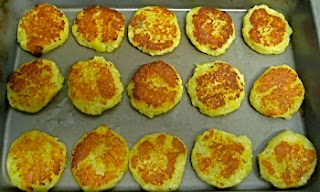
  • Aloo tikkis: I make them very simply, nothing but boiled mashed potato and salt (and sometimes bread as a filler) formed into patties and shallow-fried, as shown in this recipe. You can add spices to the tikkis if desired.
  • Chana 
  • Minced raw onion
  • Minced cilantro
  • Sev
  • Date tamarind chutney
  • Whipped yogurt (optional)
There you have it, chaat that feels like a special treat but packs in plenty of nutrition among the layers of flavor. 

Thursday, January 17, 2008

Pillowy Goodness: Laadi Pav

A few weeks ago, as we were relaxing at home in the evening, the doorbell rang and I nearly jumped out of my skin. It was only some friends dropping in but the reason for my startled jumpy response was a simple one: no one *ever* comes to the door here. This is in stark contrast to homes in India, where my general experience is that there is not a moment's silence from dawn to dusk as a procession of tradespeople arrives at the door in a never-ending stream. I think my Grandmother's home in Bombay is an extreme case, where, at some point, my grandmother and aunt got tired of the jangling doorbell and now just prop the door open all day. From the dudh-walla (milkman) and the paperwalla (newspaper guy) heralding the start of a new day, to the phool-walli (flower-lady) who comes bearing fragrant flowers and garlands for the evening puja, life hums along to a steady beat in that home. Some folks want to conserve energy and avoid making the trek to the 4th floor walk-up apartment, so they will just holler from the street below. Then someone rushes to the balcony and leans over and discusses the transaction. For instance, the fisherwoman, Leelu, will arrive around mid-morning with a basket of fish balanced on her head and a sparking diamond ring flashing in her nose, stand on the street outside and yell out my aunt's name. My aunt will yell back and ask her what fish she has today, and after much yelling back and forth, Leelu might either climb up or my aunt will send one of her kids down to seal the deal. My mother tells me that my Grandmother (a confirmed carnivore) even had a muttonwalla come to the door for several years! Aai always has a look of horror when she says this, partly from memories of fresh meat being hacked to pieces at the front door, and partly from sheer consternation at meat being sold from door to door out of an open basket in a hot and tropical city. Notwithstanding food safety rules and regulations, I don't think anyone ever got sick from eating the stuff. One person who can be counted on to show up every day is the pav-walla, bring along slabs of bread called laadi pav, which have a cripsy crackling crust and an airy and ridiculously soft interior. Halved pav with soft salty Amul butter slathered inside. Living halfway across the globe from Bombay, now that's the stuff that money can't buy.

I won't lie to you: I don't think I could survive the relentless cacophony of that sort of life, and like my peace and quiet, thank you very much. But to have fresh bread, fruits, vegetables, flowers arriving at the doorstep- that would be quite a treat, wouldn't it? More than anything, it is the relationship that grows between you and the person bringing you the food; my aunt is very particular about treating these folks as extended family. They in turn always bring her the best of everything.

OK, you think I have rambled on enough for one post? Here is my attempt to make some of that laadi pav at home. This post on Jugalbandi is a must-read essay about this incredible bread that Bombayites know and love. I tried to make my imitation pav using the Tender Potato Bread recipe from the Daring Bakers. I had used that bread recipe to make khara buns, thanks to Shilpa, and was struck by the pav-esque quality of the bread. Hence this attempt.

I would not call this an easy recipe. This dough is difficult to handle- it is extremely sticky. But the whole process was really enjoyable for me, with lots of therapeutic kneading involved. Although it is called potato bread, there really is only 1 large potato for 18 hearty rolls, so it is not potatoey by any means, but the presence of the potato yields beautiful results in terms of texture. I also used this dough to make pizza crust and I am afraid it did not work so well; the dough is a little too soft and sticky for that (maybe it needed a bit more flour). I would *strongly* suggest reading Tanna's detailed post for many helpful notes about this recipe. The potato bread posts from the Daring Bakers will likewise provide insights from hundreds of home bakers who have tried this recipe. We can learn from their experiences! I have adapted the recipe so that nearly half the flour is now whole wheat, and have halved the recipe. I loved the fact that the recipe made exactly 2 slabs of pav using pans that I have on hand.

Potato Bread Laadi Pav

2008_14
(Adapted from Tanna's post, Recipe from Home Baking: The Artful Mix of Flour & Tradition Around the World by Jeffrey Alford and Naomi Duguid, makes 18 rolls)
Ingredients:
1 large baking potato (the floury kind)
0.5 T + 0.5 t salt
1 t active dry yeast
0.5 T butter, softened
2 C + 0.5 C all-purpose flour
2 C white whole-wheat flour
Method:
1. Combine the 2 C AP flour, 2 C W-WW flour and 0.5 T salt in a bowl and set aside. Keep the 0.5 C AP flour separate.
2. Wash, peel and chop the potato. Combine potato, 2 C water, and 0.5 t salt in a saucepan and bring to a boil. Simmer until potato is very tender. Strain the potatoes and place in a large bowl (save the cooking water). Mash the potatoes finely. Measure out 1.5 C of the cooking water and add it to the bowl.
3. Let the mashed potato-potato water cool down almost to room temperature (or barely warm), then stir in the yeast. Leave aside for 5 minutes.
4. Stir in 0.5 C AP flour into the yeast mix and set aside for 5-10 minutes.
5. Mix in the softened butter, then stir in about half of the flour mixture a little at a time, incorporating it well.
6. Turn the dough onto a floured surface, then add the rest of the flour slowly, kneading well. It takes 10-15 minutes of kneading to result in the final dough.
7. Place the dough in a clean bowl, cover and let it rise for 1.5-2 hours, until doubled in volume.
8. Take 2 buttered pans- I used a 9X13 rectangular one and an 8X8 square one. Knead the risen dough for a couple of minutes, then divide it into 18 equal portions (First into 2 portions, then each into 3 portions, then each into 3 portions again).
9. Form each portion into a compact ball. Arrange 12 balls in the larger pan and 6 balls in the smaller one. Cover the pans and let the rolls rise again for 35-45 minutes.
10. Brush the top of the rolls with olive oil. Bake in a 400F pre-heated oven for 15-20 minutes or until the rolls are golden brown. Serve right away!
2008_13


Vegan version: Use vegan margarine instead of butter.

We enjoyed this laadi pav with (what else but) pav bhaji. These rolls would also work beautifully to make my other favorite street foods, such as vada pav and to soak up some flavorful misal, and something called dabeli, which I will post soon. I also love eating fresh pav dunked in any spicy curry such as chana (chickpea) masala, as a change from the usual pairing with rotis and rice. Needless to say, these rolls would be perfect for making all kinds of sandwiches, whether they are Indianized or not. If you have any left over, the rolls toast beautifully.

I think I might be falling in love with potato bread. Yikes! Luckily, Tanna is doing a whole series of different types of potato breads on her blog, and I can't wait to try them. Homemade bread, whether yeasted or of the flatbread persuasion, is such good fun. And good eats.

*** *** ***

My project this month is to make the crisp and hollow puris that are used to make pani-puri. I'd like to ask you all: Have you ever tried making these at home? What recipe did you use and what was the experience like? How did they turn out? Any advice is much appreciated. Thank you!

I'll leave you with my Daily Tiffin post for January: The Simpler Life.

Tuesday, April 24, 2007

Pleasing Peruvian Purple Potatoes

Alanna is challenging us to try some new vegetables all this month with her Vegetable Contest, so here are my attempts to try some vegetables that are new to my kitchen.

When it comes to buying pantry staples like onions and potatoes, I blindly grab the first ones I can find and walk right on. So I have to give credit where credit is due: V made me buy these potatoes last time we were out grocery shopping- cute little purple potatoes. Once we got them home, I was rather excited to use them. You would think the odd color has been specially bred into the potato for novelty value. But no, this is no new potato on the block. V informed me that purple potatoes were the first potatoes ever cultivated, in Peru, and from there, they have grown and spread and become one of the world's most popular vegetables (certainly the most popular vegetable in the US). Well, after realizing that these little purple beauties are the forefathers of our white and yellow and red potatoes, I suddenly had a new-found respect for them!

On a more practical note, purple potatoes get their color from the plant pigments called anthocyanins. These pigment function as antioxidants (which perform protective functions in our cells), and that is why we are always being told to eat brightly colored vegetables. Unlike red potatoes, which are only red on the outside, purple potatoes are purple inside and out. The dull purple peel gives way to a beautiful, jewel-like purple interior. They can be used anywhere you would normally use potatoes, and end up giving the dish an interesting and unusual look. Read more about them here. I used them in two dishes, one was an experimental version of poha and the other was the popular street food sev-puri.

Experimental Poha


ExpPoha

Poha is a pantry staple in many Indian kitchens. It is nothing but white rice that is par-boiled, then flattened into flakes. Because it is par-boiled, poha cooks up quickly and is most often used in two dishes. One is a dry, trail mix-like snack called chivda- see recipes here, here and here; and the other is a cooked breakfast dish often called simply poha- see recipes here, here and here.

This poha was experimental for two reasons:
1. I used purple potatoes instead of the usual ones.
2. I used a mixture of regular poha and flakes of multigrain cereal instead of the poha alone.

It started when I bought a box of County Choice Organic Hot Multigrain Cereal as an variation to my usual oatmeal. This cereal is nothing but flakes of whole wheat, rye, oat and barley mixed together. When I tasted the cereal, I thought it was delicious, and not as gummy or mushy as oatmeal often is. In short, it might work in a dish such as poha. Pictured: regular poha on the left, multi-grain cereal flakes on the right.
grains

Method:
(serves 4-5)
1. Mix 1 cup multi-grain cereal and 1 and 1/2 cups poha in a large bowl. Add warm water slowly and mix into the poha mixture such that all the flakes get moistened well (don't immerse it in water, however). Cover the bowl and set aside for 10-15 minutes.
2. Do the other prep: dice one medium onion, dice one medium/ two small potatoes, finely chop 1-2 fresh chilies, mince a few stalks of cilantro.
3. Heat 1 tbsp oil in a saucepan. Make the tempering: 1 tsp mustard seeds, 1 tsp cumin seeds, pinch of asafoetida.
4. Add onion, chilies and 8-10 curry leaves and saute until onion is translucent but not browned.
5. Stir in potatoes, 1/3 cup green peas (frozen works great) and 1/2 tsp turmeric. Add a few tablespoons of water and let the potatoes cook, covered, until just tender.
6. To the soaked poha mixture, add 2 tsp sugar and salt to taste. Mix well, then add the mixture to the pan and stir well. Add a few tablespoons of water to generate steam. Cover and cook on low heat for 8-10 minutes or until cereal/ poha is cooked.
7. Turn off the heat. Stir in 2 tbsp fresh lemon juice. Garnish with cilantro and serve hot, sprinkled with some crunchy roasted peanuts, if desired.

Verdict: Poha is such a beloved dish of mine that I was loathe to experiment with it. But I'm glad I did! The whole grains added great flavor and texture to the dish, and made the poha more filling, so you can get away with a smaller portion size. The purple potatoes made the dish look more colorful and fun to eat, and tasted just like regular potatoes.
Two other healthier versions of poha here and here.

Now, scooting over from a healthy breakfast to a guilty-pleasure snack...

Sev Puri


SP
Sev puri is a very popular street food (and made at home, evening snack) in India. The little tasty crunchy bites of sev puri consist of a deep-fried flour puri topped with minced onion, boiled potato, minced cilantro, sweet-and-sour tamarind chutney, spicy mint-and-cilantro chutney and garnished with sev (fried strands of chickpea flour).

I had not tasted sev puri for years, because fresh and good puris are not easy to find, and I'm too lazy to fry them myself. Last week, I came across a new product at Trader Joe's: Wonton chips. Basically, they are pieces of wonton wrappers, deep-fried, making them practically the same thing as the puris for sev puri. I used these chips to make sev puri, topped with everything I have written above, with some boiled, peeled, diced purple potatoes instead of regular ones. I can't tell you how authentic and delicious they tasted! The purple potatoes made the sev puris look quite cute, and the wonton chips are a perfect substitute for real, live puris. If there are no Trader Joe's stores where you live, you might want to try using these newly-launched chips. I'm betting they are also quite similar to the puris for sev puri.

After all this purple goodness, I'll see you in a couple of days with something green! Bye for now!

Sunday, April 08, 2007

K is for Kati Roll

The myriad cuisines of India all love their vegetables! Veggies are diced and sliced, grated and mashed, stir-fried and curried into hundreds of vegetable dishes. In this series, the A to Z of Indian Vegetables, we take an alphabetical journey through the various avatars of vegetables relished in Indian cuisine. For each letter, we will make a tasty vegetable dish that illustrates one manner in which vegetables are savored in India.


The "K" of Indian Vegetables

The letter K inspired twenty-two appetizing Indian flavors!

The K vegetables today are not vegetables at all :)

Let's start with two rich, delicious and nutritious K unvegetables, one is a fruit and the other, a nut...Khajoor or dates, and Kaju or cashew nuts. These two natural goodies come together in a beautiful sweet treat called Khajoor Kaju Laddu made by Sreelu of Sreelu's Tasty Travels.

Then, we have a fungus masquerading as a vegetable, Kumbh or mushroom. Wild mushrooms are used in some select parts of India, and cultivated mushrooms have just become popular and readily available in the last decade or so. Even so, Indian cuisine has taken to mushrooms eagerly and we have tons of recipe for cooking them Indian-style. Here, Vani of Spiced... shares an easy way to use mushrooms and all the vegetables you have on hand to quickly create a satisfying Kumbh Pulao.

Next, we have a flower, or rather, a part of a flower, imitating a vegetable: the lotus root, known in Hindi as Kamal Kakri. Trust Linda of Out Of The Garden to use this gorgeous root to make a delicious creation...she dips slices of the kamal kakri into batter and fries it into an unusual snack: Kamal Kakri Pakoras.

The next word is a bean rather than a vegetable, Kale chane, translating into "black garbanzo". These are a variety of chickpeas that are smaller and darker than the garbanzo beans that are commonly used. Richa of As Dear As Salt cooks these tiny beans into a delicious tomato-onion based curry called Rase Wale Kale Chane.

K also represents a taste: Khatta in Hindi, meaning "tangy" or "sour". Indian cuisine uses a staggering variety of ingredients to impart a tangy note to so many dishes: tamarind, raw mango, dahi (Indian-style yogurt), tomato, lemon and lime, the list is endless. We have two tangy dishes here...

Richa of As Dear as Salt combines moong and dahi into the simple yet delicious dish called Khattu Mag. This is a Gujarati favorite, Khattu in Gujarati means tangy.

Musical of Musical's Kitchen uses jimikand (a type of Punjabi tubers) and cooks them with a tangy sauce to make Khatte Jimikand, which she then serves with some spicy puris.

Next comes a gorgeous, festive curry, the Korma. A popular restaurant-style dish as well as one made at home for special occasions, kormas are made using many different recipes in different parts of India. Latha of Masala Magic makes her version of Korma with tons of vegetables delicately laced with a cashew-cream sauce .

We now come to a dish that is creamy and comforting, and at the very core of Indian home cooking: Kadhi, a curry or sauce that is based on buttermilk or yogurt. We have four delicious versions of the kadhi...

The first is a version from Sharmi of Neivedyam, who makes a Punjabi Kadi that features golden spinach dumplings swimming in a tangy yogurt sauce, restaurant style.

Another version of kadhi with dumplings comes from Prajakta of Swaypakghar. She makes a Maharashtrian version with little lentil balls that are cooked in yogurt sauce to make these delicious Kadhi Gole.

Next comes an easy, made-in-minutes version of Spinach Kadhi by Tee of Bhaatukli. This is her debut post! Welcome to the food blog world, Tee.

Traditionally, Kadhi is paired with a rice-and-lentils medley called Khichdi. The mere thought of eating a bowl of khichdi-kadhi is enough to put most Indians in a good mood, and it is certainly my all time favorite comfort food. Here, Coffee of My Khazana Of Recipes presents a beautiful step-by-step guide to creating a heart-warming meal of Khichdi and Kadhi right in your own home.

(UPDATED: I am terribly sorry that I inadvertently left out one entry in the original round-up, and this is where I intended to insert it, and somehow forgot at the last minute :( My heartfelt apologies to Swapna!)

Apart from the K ingredients and dishes, an indispensable tool in the Indian kitchen is also a K word: the Indian-style wok, called a Kadhai. The kadhai is very useful for so many different kinds of preparations: frying, stir-frying and much more. Indeed, a particular kind of North-Indian stir-fry (highly popular in restaurants) is named after the kadhai! Swapna of Swad shares a delicious recipe for Kadhai Vegetables, a medley of vegetables in a gorgeous spicy curry.

Coming to an array of regional dishes...

K ingredients:

Kunjulli is Malayalam (language of Kerala) for "shallots". Reena of Spices of Kerala introduces the shallot as the "unsung hero of many of the scrumptious Kerala dishes" and makes a flavorful, traditional curry of eggs with shallots or Kunjulli Mutta.

Kovakkai is Tamil for "ivy gourd" (tendli/ tindora). Sheela of Delectable Victuals uses this tender green vegetable to make her favorite dish, Kovakkai Paruppusili, by sauteeing the ivy gourd with steamed lentils.

Kothimbir is Marathi (language of Maharashtra) for "cilantro". Anjali of Anna Parabrahma mixes a liberal amount of cilantro with chickpea flour to make a steamed cake that is sliced and fried into some golden, savory Kothimbir Vadi.

Kudamilagai is Tamil for "green pepper". Ranjani of Eat and Talk cooks this ever-popular and easily-available vegetable into a delicious stir-fry called Kudamilagai Poriyal.

Kobbarikaya is Telugu (language of Andhra Pradesh) for "coconut". Shivapriya of My Cookbook makes a medley of the "sweet coconut and sour mango" to create a tasty chutney called Kobbarikaya Mamidikaya Pachadi.

Kariveppilai is Tamil for "curry leaves". Revathi of En Ulagam talks about the curry leaf as "n often forgotten ingredient but nevertheless filled with micro-nutrients" and goes on to make a spicy Curry leaves powder that can be mixed with steamed rice for an instant tasty lunch.

Kakdi is Marathi (and also Hindi, although the two words are pronounced slightly differently) for "cucumber". Mahek of Mahek's Kitchen makes a breakfast dish with cucumber that is popular in Goa, a rich and sweet pancakes redolent with cardamom, called Kakdiche Bhakri.

K dishes:

Bee and Jai of Jugalbandi make a Tamil dish called Kootu, literally translating as "combination". Their version of Kootu is a nutritious medley of toor dal and red chard, sprinkled with a crunchy topping of pumpkin seeds.

Asha of Aroma/Foodie's Hope makes a Gujarati dish called Khandvi, which is just about a work of art: batter ladled onto a flat surface, then rolled into a savory delight. Asha presents a step-by-step guide to making tasty home-made Khandvi.

Suma of Veggie Platter makes a dish from Karnataka called Kosumbari. With cool cucumber, soaked moong dal and a sprinkling of herbs and lemon juice, Suma's version of Kosumbari looks like the perfect snack for the hot summer months ahead.

Finally, a regional specialty from a reader, Saylee D., who has her own stock market blogs but this time, wanted to share her Mom's and Grandma's recipe rather than financial advice! She e-mailed a recipe for kanda kairi, two K words that mean "onion" and "raw mango" respectively in Marathi. This is a typical recipe for a mouth-watering relish or quick pickle from the Vidharbha region of Maharashtra, or Varhadi as it is referred to. Here is Saylee's recipe, in her own words:

Kanda Kairi

Ingredients:
Kairi or raw mangoes 2
Salt
Ready mango pickle masala (i used k .pra) 3 table spoons
Onion(sliced) 1
Oil 2 tablespoons
Mustard seeds
Asafoetida 1/2 teaspoon
Turmeric pwd 1 teaspoon
Method:
1. Grate the raw mangoes, put them in bowl, then add the sliced onion to it.
2. Add salt as per your taste, add the mango pickle masala
3. In a saucepan, heat the oil. Temper the oil with the mustard seeds and the pinch of asafoetida. Add the haldi pwd and let it cool.
4. After it has cooled, add it to the above mixture. Mix it properly and the pickle is ready.

**********************************************************
K is for Kati Roll: Vegetables and Paneer

Dairy foods play an important role in Indian cuisine. Dahi (Indian-style yogurt) and ghee (clarified butter) are part of almost any Indian meal. Another milk-derivative that is a prominent part of Northern Indian cuisine is paneer, the only cheese that is indigenous to India. Paneer is easily prepared at home without the use of enzymes like rennet, using souring agents like lime juice to "split" milk (biochemically, to make the milk proteins insoluble and precipitate them by lowering the pH of the milk) and by collecting the resultant solids (mostly the milk protein casein) and pressing them down into cheese cakes.

Paneer, with its mild, milky and pleasant taste, is well-liked by most people. Paneer does not melt on being heated, instead it can fried to give it a golden crunchy crust. With its general appeal, paneer in its various forms is used in many many dishes in Indian cuisine, from curries to desserts. In curries, it is an easy way to add some additional protein to a vegetable-based dish. Often, vegetarian versions of meat curries will substitute fried paneer cubes for the meat. Can tofu be used as a substitute for paneer in Indian dishes? My answer would be, yes and no. Yes, in many cases, you can make the substitution with great results. No, tofu tastes quite different from paneer so you should not expect the results to be identical. I often make a compromise: I save real paneer for special occasions and use tofu for weeknight dinners in place of paneer. If you really manage to squeeze the water out of tofu and then bake/ shallow fry the cubes, it will absorb the sauces better.

For lovers of paneer, a vegetable-paneer curry may often be much more appealing than the vegetable curry alone. Adding paneer is an easy way to make a dish more festive. In this series, I certainly wanted to make one dish with vegetables and paneer, and of the dozens that are out there, I chose one from my favorite food categories, street food! Kati rolls are a creation that takes on different avatars in different parts of India. "Kati" translates as stick, and the idea is just to take a roti or flatbread, stuff it with one of many tasty stuffings, and roll it up into a cigar-shape that makes for easy eating on the run. In NYC, I got hooked onto these kati rolls at the Kati Roll Company in Midtown Manhattan.

This is my super-quick version of paneer kathi rolls. There are three parts to my recipe: (a) the roti. The best way would be to make your own rotis. The street food version uses rotis made from all-purpose flour, but making atta (whole-wheat flour) rotis would be much more nutritious, and just as delicious, I bet. I really had no time the night I made these, and ended up using store-bought whole-wheat tortillas with great results. (b) the filling. I make a spicy dry curry that almost resembles the kadai paneer that you get in restaurants. To this, I add a lot of chaat masala for the spicy and tangy flavor. (c) the crunchy salad, to add a fresh note to the whole thing. I used raw onions and carrots, and lots of herbs: fresh cilantro, and *ta da* fresh methi that I grew myself (the very first time I have ever managed to grow anything at all, so please excuse my out-of-proportion enthusiasm):
methi

This also happens to be a reader-request dish. A reader, Prajakta D., who also lives in Missouri, mailed me some weeks ago asking for a recipe for kati roll. Here it is!

Kati Roll


1. Make the filling: Chop 1 large onion and 1 large green pepper into big cubes. Heat 1 tbsp oil in a skillet. On high heat, saute the onion and pepper until slightly browned and blistered. Add 1/2 tsp ginger-garlic paste, 1 tsp red chili powder, 1/2 tsp turmeric and salt to taste. Stir in 1 packet (about a cup or two) paneer cubes (thawed). Stir-fry on medium-high heat. Add 1 tsp kasuri methi and 1 chopped tomato (fresh or canned) and stir-fry for a few more minutes. Turn off the heat and stir in 1 tsp chaat masala.
KatiFilling
2. Make the salad: Slice a small onion very thinly (I used a mandoline). Cut 1 carrot into thin slivers. I find the taste of raw onion too sharp sometimes, so I marinated this salad for 5-10 minutes with 1 tsp lemon juice and a sprinkle of salt to "cook" the onion a little bit (ceviche-style). Then, add some herbs. I used 2 tbsp minced cilantro and 2 tbsp minced methi or fenugreek leaves (home-grown!). You can add some mint too.
KatiSalad
3. Assemble: Heat a tortilla/ roti in a pan. Then place some filling and some salad on the tortilla/ roti, like so:
KatiRoll1
4. Roll it up, and it's a wrap!
<KatiRoll2
Kati rolls are designed to be extremely tasty, and every bite should be a flavor explosion, so if you find that your kati roll tastes too tame, sprinkle additional lemon juice, chaat masala, chili powder or all three until it tastes right.

Variations on a theme
1. Make a mint-cilantro chutney and smear it on the roti before filling it.
2. Make a version with potato: using cubes of boiled potato instead of the paneer.
3. Make an egg version by using a spicy omelet as a filling.

How do you serve this dish?
1. Eat it as a snack in the evening, or serve it as part of a chaat party.
2. Pack it in a lunch box or on a picnic.
3. Cut each roll into little pieces and serve as a tasty appetizer.

Fellow bloggers have come up with many delicious Vegetables and Paneer. Here are some of my favorite finds:
Making Paneer from Mahanandi,
Chili Paneer from Hooked on Heat,
Mutter Paneer from Indian Food Rocks,
Paneer Pepper Jalfrezi from The Spice Who Loved Me,
Methi Chaman from Cook's Hide-out,
Palak Paneer from Sailu's Food,
and one from my own archives:
Paneer Pilaf.

Previously on the A to Z of Indian Vegetables...
A is for Aloo Gobi: North-Indian Stir-Fry
B is for Bharli Mirchi: Stuffed Vegetables
C is for Carrot-Cashew Payasam: Desserts
D is for Dum ki Arbi: Dum Style of Cooking
E is for Egg-Fried Rice: Rice and Vegetables
F is for Foogath: South-Indian Stir-Fry
G is for Gobi Paratha: Vegetables in Breads
H is for Hariyali Tikki: Vegetables in Appetizers
I is for Idli with Vegetables: Vegetables for Breakfast
J is for Jalfrezi Vegetables: Restaurant Style

Saturday, July 09, 2005

"Chaat" and Chat

I have been enjoying this warm sunny Saturday...and I just finished a wonderful lunch with my BFF. She comes into the city every Saturday to train for a marathon, and after several weeks of not being able to meet up, we finally had a chat-fest over lunch.

I wanted to make a cool summer appetizer and settled on one of my favorite chaats or Indian street foods- Dahi Vada or lentil balls in yogurt.

Dahi Vada
(makes about 20 balls and serves 3)

For the Vadas:

  • Soak 1 cup urad dal in warm water for 4-8 hours. Drain and process the dal in a food processor or blender to make a thick smooth batter. 
  • Add 1/2 tsp of salt and 2 finely chopped chillies to the batter and mix. 
  • Drop teaspoonfuls of batter into hot oil and deep fry to make golden-brown vadas.
  • After frying, drop the vadas gently into a bowl of warm water.
  • After soaking for a few minutes, remove each vada, press it between your palms to squeeze out excess water and then refrigerate them to chill.

For the Yogurt Sauce, whip together:

  • 2-3 cups yogurt
  • milk if needed to thin the yogurt
  • salt to taste
  • 1 tsp sugar
  • 1 tsp cumin-coriander powder
  • 1 tbsp minced cilantro
  • dash of red chilli powder
  • 1/2 tsp chaat masala

To serve: Simply place the vadas in a bowl and pour yogurt sauce on top. Add a spoonful of sweet chutney (such as tamarind or date chutney) and enjoy a tangy chaat.

In many ways it is a perfect appetizer- it can be made in advance, chilled and needs no re-heating. It is not much to look at, but it tastes great.

DahiVada

Saturday, April 30, 2005

Bombay Street Food: Pav Bhaji

Bombay- now there's a city that loves tucking in! A teeming metropolis of about 20 million people (bigger than most European nations), it makes even New York City feel like a sleepy little town! At any point in time, millions of Bombayites are out in the streets eating. Even at midnight (especially at midnight), hordes of people crowd at little restaurants and roadside stalls to tuck into spicy chaat and crispy dosas and creamy fruit-flavored kulfis and above all, pav bhaji.

Whenever I visit Bombay, the main item on the agenda is : Eat Sukh Sagar Pav Bhaji. Sukh Sagar is a little restaurant near the Chowpatty beach in South Bombay, and it serves simply the most awesome snacks, the likes of which evoke feelings usually reserved for religious epiphanies.

What, then, is Pav Bhaji? It is a spicy vegetable stew that you sop up with pillowy bread. The pav bhaji chef (bhaiyya) stands at the mouth of the restaurant with a huge cast-iron pan in front of him. He is surrounded by bowls of chopped veggies and an alarming number of packets of Amul brand butter. The bhaiyya will start sautéing the veggies together with boiled potatoes, spices and enormous dollops of butter and mash the whole mixture into a sizzling vegetable dish. He will then serve this bhaji with rolls of bread called pav that have been likewise drowned in butter. The final touch: the dish is topped with raw onion slices and lemon wedges. The whole mess is simply heaven on a plate. Or a heart attack on a plate, depending on your point of view.

Which brings me to the misery that overcomes people who move out of Bombay and would have to fly 24 hours to get to our beloved Sukh Sagar. What do we do? The best solution would be to catch the next flight out of JFK but an alternative solution is to make pav bhaji at home. Every Indian store sells pav bhaji masala, a dry mix of some 18 or so spices. The method is simplicity itself: saute onions and ginger-garlic, add veggies and boiled potatoes, tomato and pav bhaji masala; then taste it and wail about how it is not like Sukh Sagar's. It tastes OK but is just not the real thing.

I lived my life in sub-standard-pav-bhaji-hood, until last December. That's when I was visiting my parents and my Mom's close pal Aunt Madhuri dropped in with some home-made pav bhaji for me. I was like "yeah, thanks" because, you know, Auntie M is an amazing cook, but is hardly the Sukh Sagar Bhaiyya. Then my mother started reheating the pav-bhaji and I started jumping for joy...the aroma was exactly like that of the genuine article. And it tasted so darn close too! I accosted Aunt M and wheedled the recipe out of her and was dismayed at how plain and simple (and almost wrong!) it sounded. She insisted that onions are not to be sautéed for the bhaji (what!!) because they lend a sweetish non-authentic flavor. Her method used a lot of cauliflower which again seemed totally wrong. She used Everest brand pav bhaji masala so anyway, I bought a couple of packets and returned to NYC.

Once here, I barely waited for the jet lag to subside and then set out to make pav bhaji exactly as per good ol' M. The whole time I was making it I was pretty sure it was going to be a disaster (I wondered bitterly if M was protecting her culinary secrets by giving out bogus recipes) but I persevered and suddenly at the last stage of cooking, there was a miracle: my kitchen smelled like, you guessed it, Sukh Sagar. Hallelujah Hallelujah, praise to aunt Madhuri and her pav bhaji recipe. Here it is, for about 4-6 servings.

Pav Bhaji

March05_6

Ingredients:
1 head of cauliflower, cut into florets
2 medium potatoes, peeled and cut into large chunks
1 tbsp. oil
1 green bell pepper, minced
1/2 tsp. turmeric powder
1 tsp. chili powder or red chili paste (or more to taste)
1 tsp. ginger-garlic paste
salt to taste
2-3 cups tomato puree or 2-3 tbsp. tomato paste
1/2 cup peas (fresh or frozen)...optional
1 tbsp. Everest pav bhaji masala (or more to taste)
1-2 tbsp. butter

Method
  1. Boil the cauliflower and potatoes till tender and set aside. I usually do this in a pressure cooker or instant pot (pressure cook HIGH 3 mins; release pressure). Mash the vegetables.
  2. Heat oil in a deep saucepan or dutch oven and saute the pepper. Add ginger-garlic paste and saute some more.
  3. Add turmeric powder, chili powder to taste and salt to taste. Saute for a few seconds.
  4. Add tomato puree, peas, boiled potatoes and cauliflower, pav bhaji masala and butter.
  5. Keep sauteeing and mashing it together till it is a smooth mixture, adding water as required (you can use a potato masher to help you along). Be aware that the mixture can spurt up as it boils, so keep a lid on it while you are not actively stirring it. Simmer for 20-25 minutes to really get the flavors to meld together.
You have to keep tasting and adjusting salt, masala and tomato till you like the balance between the tomato-ey tang and the heat of the masala.

Serve with:
1. More pats of butter (as much as you can dare really, don't be chicken now),
2. Finely sliced/ chopped onions, minced cilantro and wedges of lemon.
 
pavB1
3. The genuine pav-bhaji is served with real Bombay laadi pav...slabs of bread, so named because the rolls are sold as entire slabs and you break the rolls off as required. This bread is so yeasty and terrific! I serve it with any crusty bread that is chewy on the inside, like ciabatta or country boule or French rolls. I don't recommend burger buns at all...they are too soft and pasty. Try and find "real" bread in a bakery :)

Variations:
1. Fry the bread in some butter first. For an even spicier result, make masala pav...melt some butter in a skillet. Sprinkle pav bhaji masala in it, then fry the bread in this spicy butter until sizzling and golden.
2. To make cheese pav-bhaji, top the pav bhaji with some shredded cheese. In India, the brand used is Amul cheese...in the US, Monterey Jack cheese comes close to this. Or try Cheddar. (Thanks Anon, for reminding me of this variation)
3. Some readers have suggested frozen mixed vegetables to increase the veggie content of the pav bhaji. I think beans and carrots would work well.
4. A reader named Manasi suggests the addition of some garam masala to the bhaji to give it an even more authentic taste. She also recommends MDH brand pav bhaji masala.
5. Another anonymous reader suggests adding Priya's Tomato Garlic Pickle for added pizzazz.

I hope you enjoy this taste of Bombay! I thank everyone who has tried this recipe, and takes the time to leave their valuable feedback, often with great suggestions and variations.